
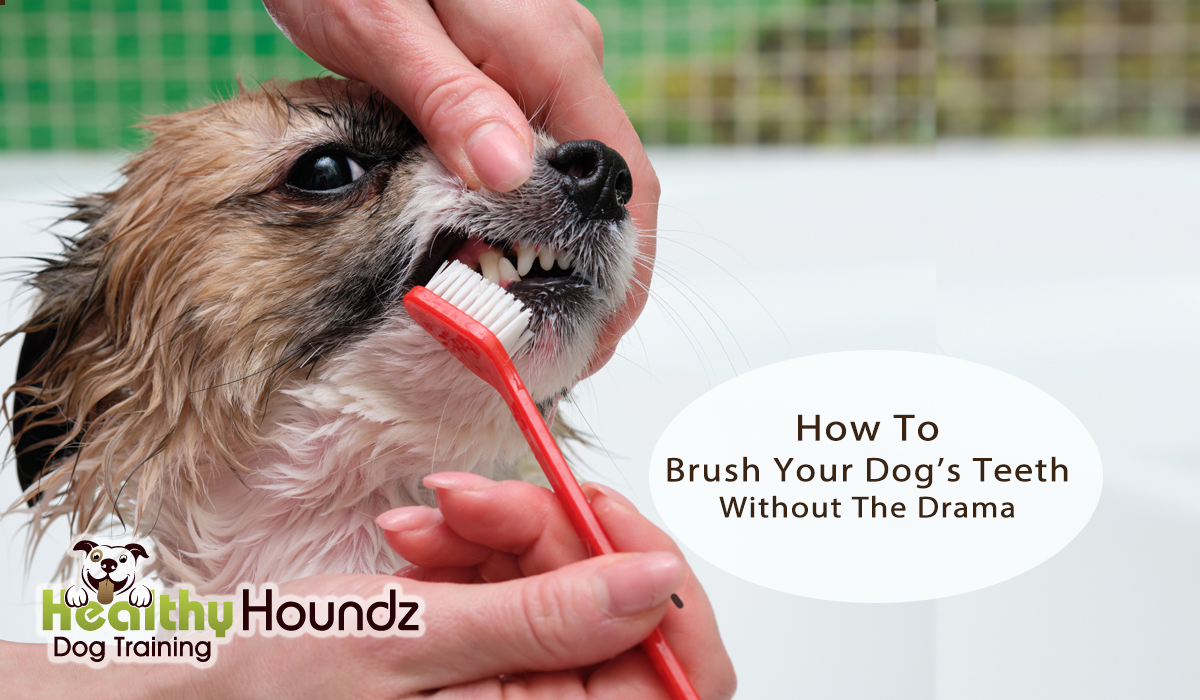
If you’re like over 90% of dog owners, you do not brush your dog’s teeth on a regular basis. It’s tough. Most dogs do not naturally enjoy having the insides of their mouths poked and prodded, and they may be too enticed by chicken flavored toothpaste to stay still.
But if you train your dog to tolerate brushing, you can save thousands of dollars over their lifetime in dental bills. You’ll also help them live longer by preventing complications of oral bacteria that spread to their heart, kidneys, and liver.
Tools For Brushing Your Dog’s Teeth
Your dog’s toothbrush should have soft bristles and be small enough to fit comfortably in their mouth. A toddler toothbrush works great for most dogs. You can also wrap your finger in a piece of gauze if you and your dog find that easier.
Dog toothpaste should always be used because it is safe to swallow. Many human dental products contain toxic additives that are poisonous to dogs. Enzymatic toothpastes break down bacteria that cause odour and gingivitis. A homemade toothpaste made with coconut oil and baking soda (optional) can work in a pinch.
A dental-friendly reward can be helpful, but naturally giving your dog treats while brushing will negate the cleansing. Tasty poultry flavored dog toothpaste can be its own reward. You can also let your dog lick coconut oil off a spoon between brushes, as it has antiseptic properties.
Training Your Dog To Tolerate Brushing
While it may not seem like sitting patiently while having their teeth brushed is a complex skill, breaking it down into steps greatly increases your chances of success.
Start with a sustained chin rest. You can teach your dog to rest their chin in the palm of your hand or on another surface while you brush their teeth. This skill can also be used to help your dog stay still during vaccinations and other handling.
Next, you can move on to having your dog tolerate having their teeth examined. You’d start with rewarding them just for letting you lift one side of their lip. This exercise should be fun and exciting for your dog. If they’re pulling away, it means you’re moving along too fast.
When your dog happily lets you lift their lips, you can try touching a tooth with your fingertip. Remember, going slowly may seem extra time-consuming, but in the long run, you’ll be able to brush their teeth quickly and easily without a struggle. The entire process, from teaching a chin rest to progressing to brushing their teeth, can take anywhere from a few days to a few weeks.
In the meantime, you can get your dog familiar with their toothbrush. You may let them lick a small amount of toothpaste off the bristles. When they’ve become used to having their mouth handled and touched, you can try brushing one tooth at a time, allowing them to lick the brush or a spoon of coconut oil between teeth.
Always brush lightly with a soft bristled brush. The purpose of brushing is to eliminate transparent, sticky plaque before it hardens and forms yellow tartar deposits. Hardened tartar will not come off with brushing no matter how hard you brush, and scrubbing can lead to bleeding, irritated gums. If your dog has hardened tartar, it will need to be safely scraped by a veterinary dentist. Then, you can use brushing as regular upkeep to prevent it from returning.
Alternatives To Brushing
Even though it’s imperative that you take control of your dog’s dental health, you won’t be able to start effectively brushing overnight. As with most areas of dog training, it’s important that you go at your dog’s pace and regularly assess their level of comfort. If you start brushing thoroughly without prior training, your dog is likely to find the process very stressful.
While you’re working your way towards regular brushing, consider using dental care alternatives in the meantime. Brushing is the most effective way to clean your dog’s teeth, especially areas that are not naturally cleaned with chewing, like the outside surfaces of their canines.
Chewing bones helps clean plaque on your dog’s molars and premolars. Not all treats that are marketed as dental chews are proven to be effective. When it comes to store-bought chews. VOHC-approved products are a safe bet.
Raw bones are also effective for dental upkeep. It’s important that your dog’s bones still have meat on them, as they’ll use their incisors, those tiny teeth at the front of their mouth, to tear meat off the bone. A raw bone should always be uncooked, and it should be large enough that your dog cannot close their mouth around it. Both raw meaty bones (eaten in their entirety) and recreational bones (gnawed, not eaten) can be used for teeth-cleaning.
Water additives are another way to keep your dog’s mouth cleaner without brushing.
Need More Help?
A professional dog trainer can help you work with your dog toward positive, stress-free husbandry in a safe way.
Healthy Houndz Dog Training offers local private training in Toronto & North York, as well as remote private dog training via Zoom that works around your schedule. Book a Discovery call today.
Recent Comments