
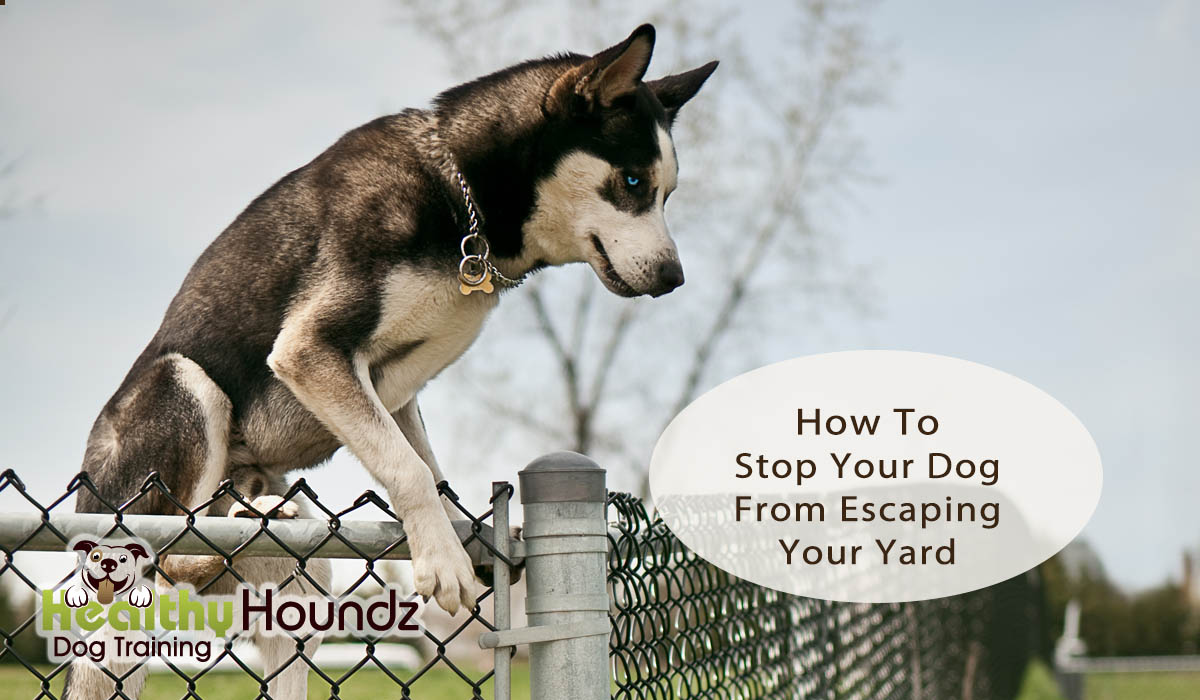
Are you having trouble keeping your dog in your yard? Whether you keep your dog contained in a fenceless boundary or they have been able to hop over or dig under a fence, it’s dangerous for them to roam.
Here’s how you can stop your dog from escaping your yard:
Can A Dog Be Trained To Not Leave A Yard?
You can use recall training and boundary training to teach your dog to stay within the limits of your property.
However, even the best-trained dog can escape their yard if they’re spooked by thunder or fireworks. That would put them in danger of wild animals and other humans. Leaving your dog outside unattended in an unfenced area is a risk no matter what.
Options For A Fenceless Property
If you rent or do not want to spend a lot of money on a permanent fence, there are some ways you can keep your dog safe and contained.
An outdoor dog run for a small dog can be as cheap as $175-250. Large, covered dog kennels can be bought for about the same price.
A tie-out can be a good option if you’re able to supervise your dog while they use it. It should always be attached to a comfy harness, not a collar, to minimize risk of choking.
You can also take your dog for walks with a long line, a leash that’s about 20-30 feet in length, or tie multiple leashes together so they have more freedom to explore.
Do Electric Fences Really Work?
Even if you hate the idea of your dog being in pain, you may wonder if using an electric fence system can save your dog’s life, even at the risk of giving your dog a shock every now and then.
In case you’re not familiar with electric fences, here’s how they work. They typically consist of a wire buried underground around the circumference of your property. Your dog wears a shock collar that is activated every time they step over the boundary. Usually, they will get an audible warning, a beeping sound, as they approach the boundary.
These boundaries work for some dog owners, but there are a few reasons why we do not recommend them:
- After experiencing a painful shock, some dogs become afraid of the outdoors entirely.
- Some dogs develop redirected aggression. Unable to identify the source of the painful shock, they may lash out at whatever is nearest, which can be passersby, cars, children riding on their bikes, other animals, etc.
- They can create a false sense of security. A dog may respect the boundary for months, even years, then one day, something may trigger them to test the boundary, until they realize that they are willing to tolerate the shock to get to the other side.
- Dogs who otherwise respect the boundary may be spooked by thunder or fireworks and may run across in attempts to escape.
- The collar can malfunction, break, or lose battery power, allowing your dog to escape.
- They do not keep out wildlife, humans, or other dogs. Unlike a physical barrier, an electric fence only works on the dog wearing the transmitter collar. So, it’s possible for any other animal to enter your property and harm your dog. It’s also possible for someone to steal your dog, provoke them to attack, or otherwise cause harm.
When Physical Fences Fail
Some dogs see fences as a challenge, rather than a barrier. Fortunately, you can make modifications to your fence to make it dog-proof.
Does your dog dig under your fence? You can bury chicken wire or use a product like Dog Defence to prevent them from digging.
Does your dog hop over your fence? Look for products that are meant to keep cats or coyotes from hopping fences. You can also prevent your dog from getting a running start with a second, smaller fence or shrubs around the inner perimeter of your yard.
What To Do When Your Dog Escapes Your Yard
While you’re working on finding a solution that works for you, your dog may have a few slip-ups. It’s imperative that you do not punish your dog once they have escaped.
The truth is, escaping the yard is a highly self-rewarding behaviour. That means that it’s so much fun for your dog that punishments are ineffective, and at best teach your dog to only escape when you’re not looking.
Try calling your dog. If they return to you, praise them, even if you truly don’t feel like it. No matter how annoyed, worried, or angry you are, it’s important that returning to you is always rewarding.
In some situations it can help to run in the opposite direction so your dog chases you. If your dog is in a precarious spot, for example, across a busy road, though, you’ll need to retrieve them.
Get Training Help!
Reward-based training can help make your bond with your dog more secure so they’ll be less likely to run off. If they do run off, training a solid recall can help ensure their safe return. No training though is 100% guaranteed to keep your dog safe while unattended in an open space.
Healthy Houndz offers reward-based private training for dog parents in Toronto and North York plus virtual training for dog parents worldwide.
Recent Comments