
A Nervous System-Aware Approach to Puppy Training
By Karen Cohen | Healthy Houndz, Toronto
🌞 Summer Can Be Overwhelming—for You and Your Puppy
Longer days. More visitors. Shifting routines.
While summer can be joyful, it often overwhelms both puppies and their humans.
If you’ve been searching how to calm a puppy, or wondering why your puppy won’t settle at night, you’re not alone. Many puppies struggle with changes in energy, environment, and expectations.
At Healthy Houndz, I use a body-based training approach that supports the nervous system first—so your puppy can learn calmly, confidently, and at their own pace.
🛏 Crates and Pens Offer Rest, Not Restriction
If you’re looking for puppy crate training help, start here:
Your puppy needs a space to rest, reset, and feel safe.
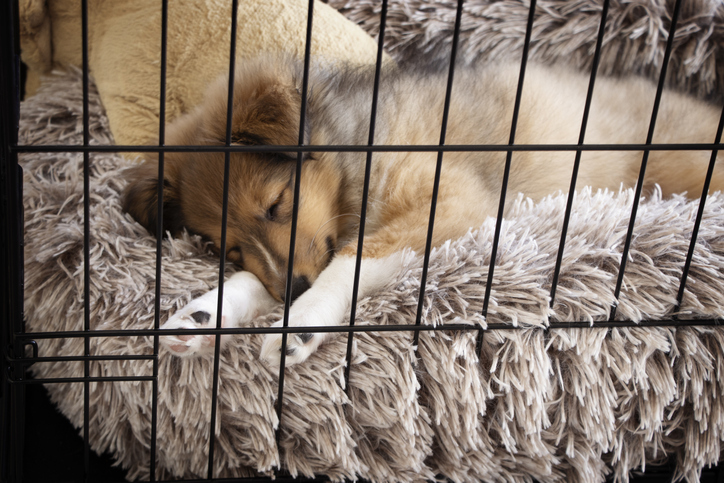
Crates and pens, when used intentionally, can help regulate your puppy’s nervous system.
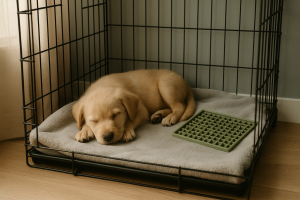
For example, after visitors arrive, guiding your puppy to a crate with a LickiMat helps them decompress—without needing to “behave perfectly” in front of everyone.
🌿 Boundaries That Breathe Create Safety
When your puppy is overwhelmed around guests, don’t push them into social situations.
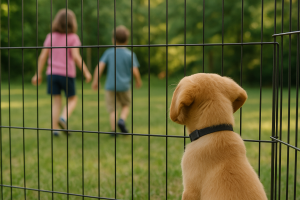
Instead, use soft boundaries: baby gates, shaded corners, or quiet rooms.
This allows your puppy to observe from a safe distance. Over time, they’ll build confidence without being flooded.
In addition, these moments give you a chance to breathe, too.
🚗 Car Time = Reset Time
If things get too loud indoors, the car (properly shaded and ventilated) can be a quiet break space.
This works especially well for puppies with separation anxiety.
For instance, some families use a crate in the hatchback during backyard barbecues—so their pup is near, but not overstimulated.
👉

🐾 Movement is Nervous System Medicine
A tired puppy isn’t just a good puppy—they’re a regulated one.
Activities like sniffaris, tug games, and frozen enrichment toys offer both mental and physical stimulation.
As a result, your puppy is more likely to settle and listen throughout the day.
If your puppy is too hyper or overly nippy, consider movement before asking for focus.
🧠 Socialization Should Be Slow and Intentional
Many new dog owners believe that more exposure = better socialization.
However, too much too soon can overwhelm your pup.
Look for soft body signals: a wagging tail, loose posture, gentle curiosity.
But if your puppy freezes or barks, it’s a sign to slow down. They’re not ready—and that’s okay.
👉
🧘 Co-Regulation Begins With You
Before we ask our puppies to calm down, we have to check in with ourselves.
Take a breath. Drop your shoulders. Even 10 seconds of nervous system awareness changes the energy between you and your pup.
Because puppies take their emotional cues from us, how we show up matters.
🌈 You’re Not Alone—Let’s Build Safety Together
Whether your puppy struggles with crate time, jumps on guests, or becomes overexcited during walks—know this:
You’re not failing.
You’re learning a new rhythm—together.
At Healthy Houndz, I support families who want to raise calm, connected, confident dogs using positive reinforcement and nervous system-friendly methods.
🐶 Ready for Gentle, Effective Support?
📅 Book a private session
📩 Or book a call —I’m here for you and your pup.
Recent Comments